ATF Study Group Session 6 - 2026 Mitigating the Risk of Carbon Lock-in in Asia
01 September 2026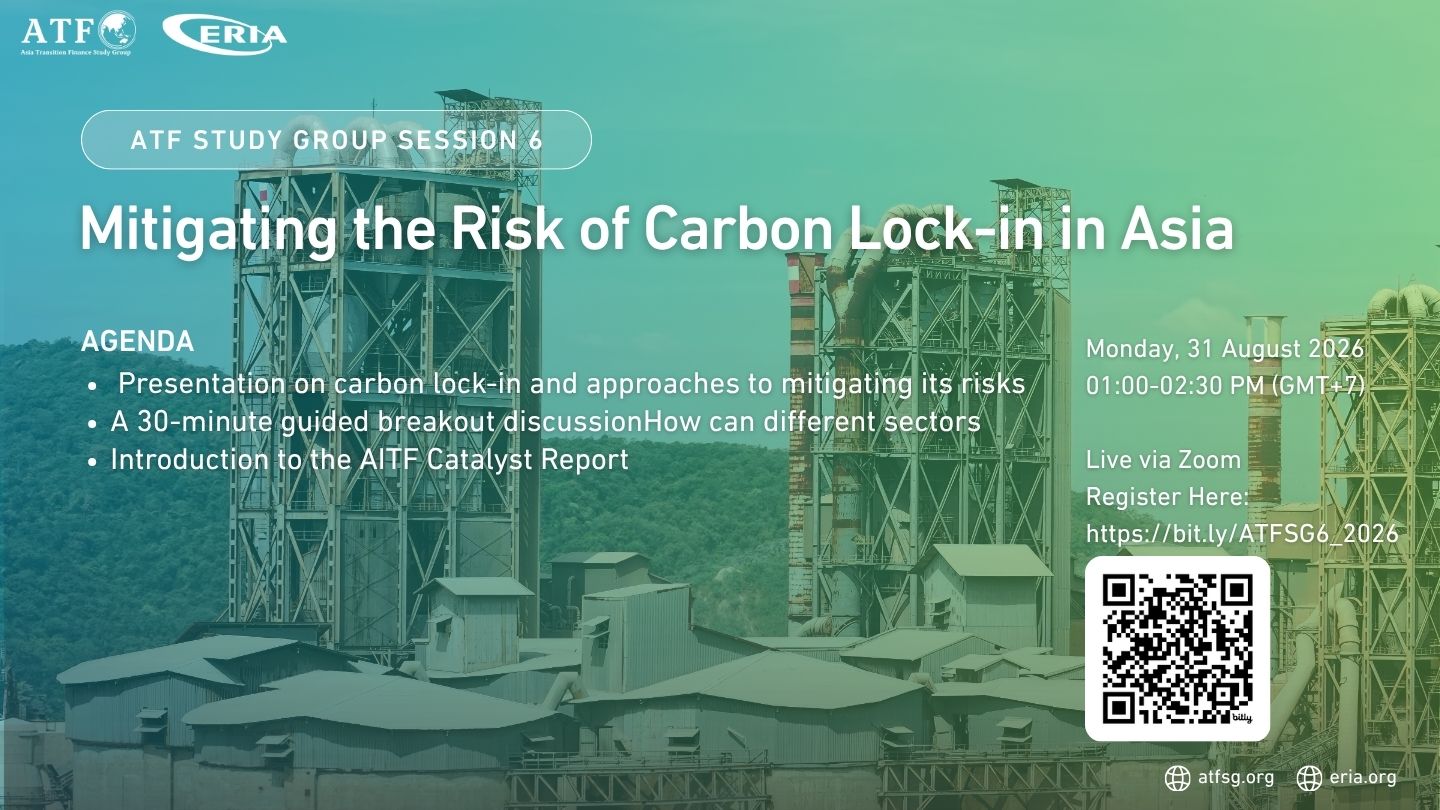
The Asia Transition Finance Study Group (ATF SG) held the sixth study group session of 2026 on 31 August (Mon).
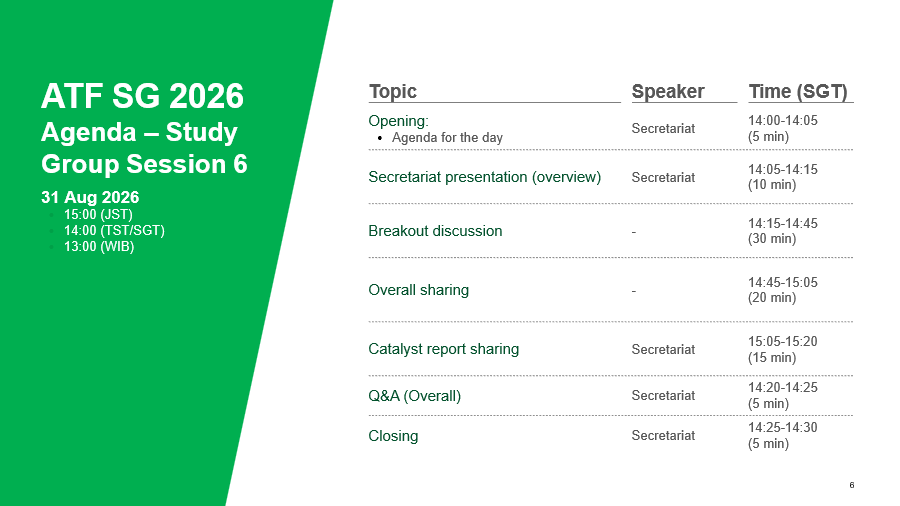
The ATF SG held its sixth study group session of 2026 on 31 August via Zoom, focusing on how financial institutions can mitigate the risk of carbon lock-in. Departing from the format of earlier sessions, a breakout discussion among participants was held, and a sharing session in which each group reported back followed.
The Secretariat framed carbon lock-in as a balance-sheet risk rather than a climate concept alone, describing how a high-emitting asset financed without a credible path to conversion, retrofit or retirement can strand and surface on the lender's own book. Four steps across the financing lifecycle were set out for managing that risk — portfolio design, activity alignment, implementation conditions, and post-financing monitoring — each mapped to existing international guidance, alongside a comparison of how far different frameworks extend across core emitting sectors, enabling sectors, and the wider ecosystem.
Turning to the region, the session noted three challenges specific to Asia: rising energy demand that renewables alone may not meet in the near term, a relatively young high-emitting asset base with long remaining life, and uneven data and disclosure readiness. The ASEAN Taxonomy and the ASEAN Transition Finance Guidance were presented as the primary regional reference points, with the Taxonomy's amber category and its sunset date requirements highlighted as accommodating a transition journey rather than requiring immediate abandonment of high-emitting assets.
The framing concluded on three points: avoiding carbon lock-in in Asia requires phased eligibility assessment rather than blanket exclusion of fossil fuel assets; contractual safeguards and post-financing monitoring are essential; and regional frameworks can enable more context-sensitive transition finance for credible projects not captured by Green-only approaches.
The main agenda was the breakout session where participants discussed a hypothetical transition project, taking the position of prospective lenders. The discussions focused on the considerations as lenders to finance transition projects, and how carbon lock-in risk can be avoided or managed. A sharing session was held in the main room to share different perspectives from each group.
In the final segment, the Secretariat shared context on the AITF Catalyst Initiative, a separate ERIA initiative supporting individual transition projects, and the proposals set out in this year's report.
The session concluded with the Secretariat announcing that the seventh study group session is planned for 18 September.