Study Group Session 4 Summary
27 February 2026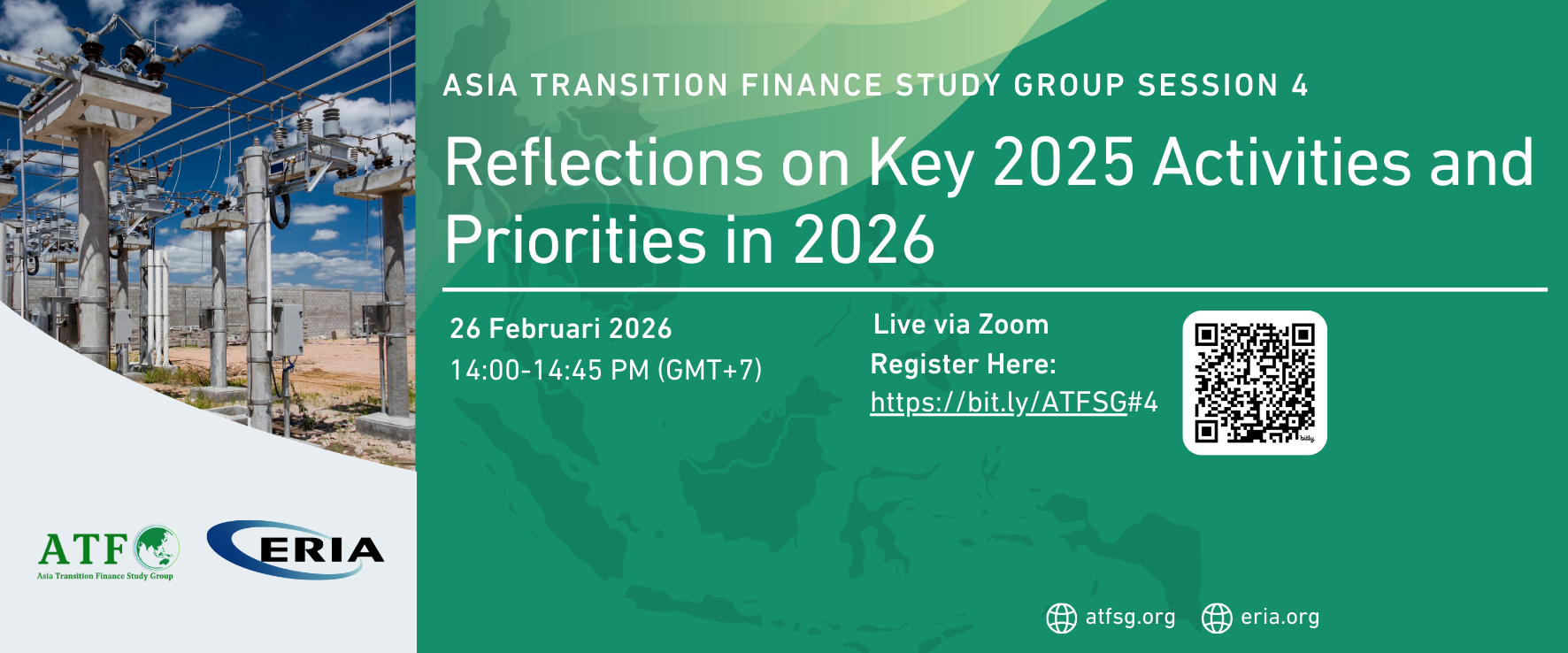
The Asia Transition Finance Study Group (ATF SG) held the fourth study group session (SG4) of 2025 on 26 February (Thu).
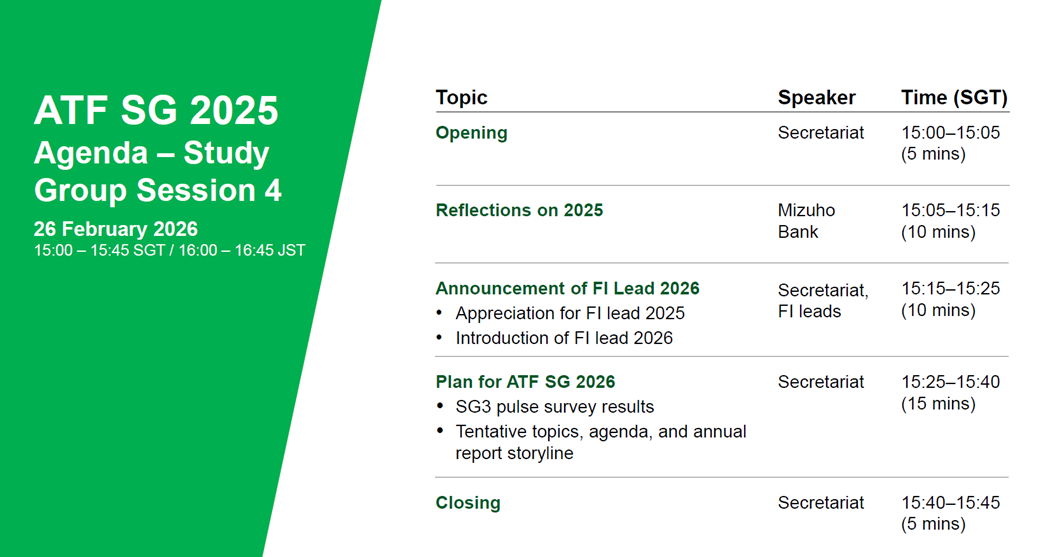
The session focused on reflecting on the achievements of 2025 and discussing preparations for ATF SG activities in 2026.
The session began with reflections on the key themes covered during the 2025 learning sessions. Throughout the year, discussions explored the latest developments in transition solutions and systems in Asia. Topics included sustainable aviation fuel (SAF), integrated battery energy storage systems and distributed networks, carbon pricing and voluntary carbon markets, and country-specific transition pathways in Southeast Asia. The reflection also highlighted lessons learned on the financial, infrastructure, and regulatory challenges associated with scaling transition solutions, as well as the updated ATF Guidelines for Transition Finance Suitability Assessment, which aim to provide practical guidance for financial institutions conducting transition finance assessments. In addition, recent external engagements, including participation in the Singapore International Energy Week 2025, were noted as valuable opportunities to share key insights from the learning sessions and engage with a broader range of stakeholders.
The session also included the announcement of the financial institution leads for 2026. The new leadership shared their aspirations to further strengthen the study group as a platform for open exchange and mutual learning, while continuing to translate insights from previous sessions into more practical discussions and applications.
Finally, the Secretariat introduced a tentative plan for ATF SG 2026, including proposed session formats, priority topics, and a draft storyline for the next annual report. Drawing on feedback gathered through a pulse survey conducted in SG3, participants expressed interest in exploring a broad range of themes, including energy supply and end-use technologies, sector-specific developments, policy and collaboration, greater comparison across taxonomies, stronger emphasis on inclusive transition, and more project-specific learning and knowledge sharing. The proposed session format for 2026 includes presentations, panel discussions, and group discussions to encourage more interactive engagement among participants.
The session concluded with an invitation for participants to share additional ideas and feedback to further refine the study group’s agenda for 2026. The first study group session for 2026 is expected to take place in March.